A meeting. A colleague says: "We're not allowed to do it like this." Another colleague replies: "If we don't do it, it's going to cost us real money."
Both have a point. And still, both walk out with an uneasy feeling. She has the impression he wasn't listening at all. He has the impression she doesn't get what this is really about.
What happened there?
Two views of the same thing
She looks at the situation with the question "Is this allowed?" He looks at it with the question "Does this make economic sense?" Two different views of the same thing – and each expects the other to answer their question.
Something similar shows up even in very small things:
Two people meet. She says: "Good to see you! It's only been a day since we last saw each other." He says: "Two, actually."
Who's right? Both. She counts the days that lay in between: one. He measures the time that has passed since they last met: two days. Both are looking at time. Look one step closer, and time splits into two things: the time span and the days in between. As soon as you say that out loud, the contradiction is gone.
With the days, you laugh for a moment and keep talking. In the meeting, you don't.
What I mean by a view
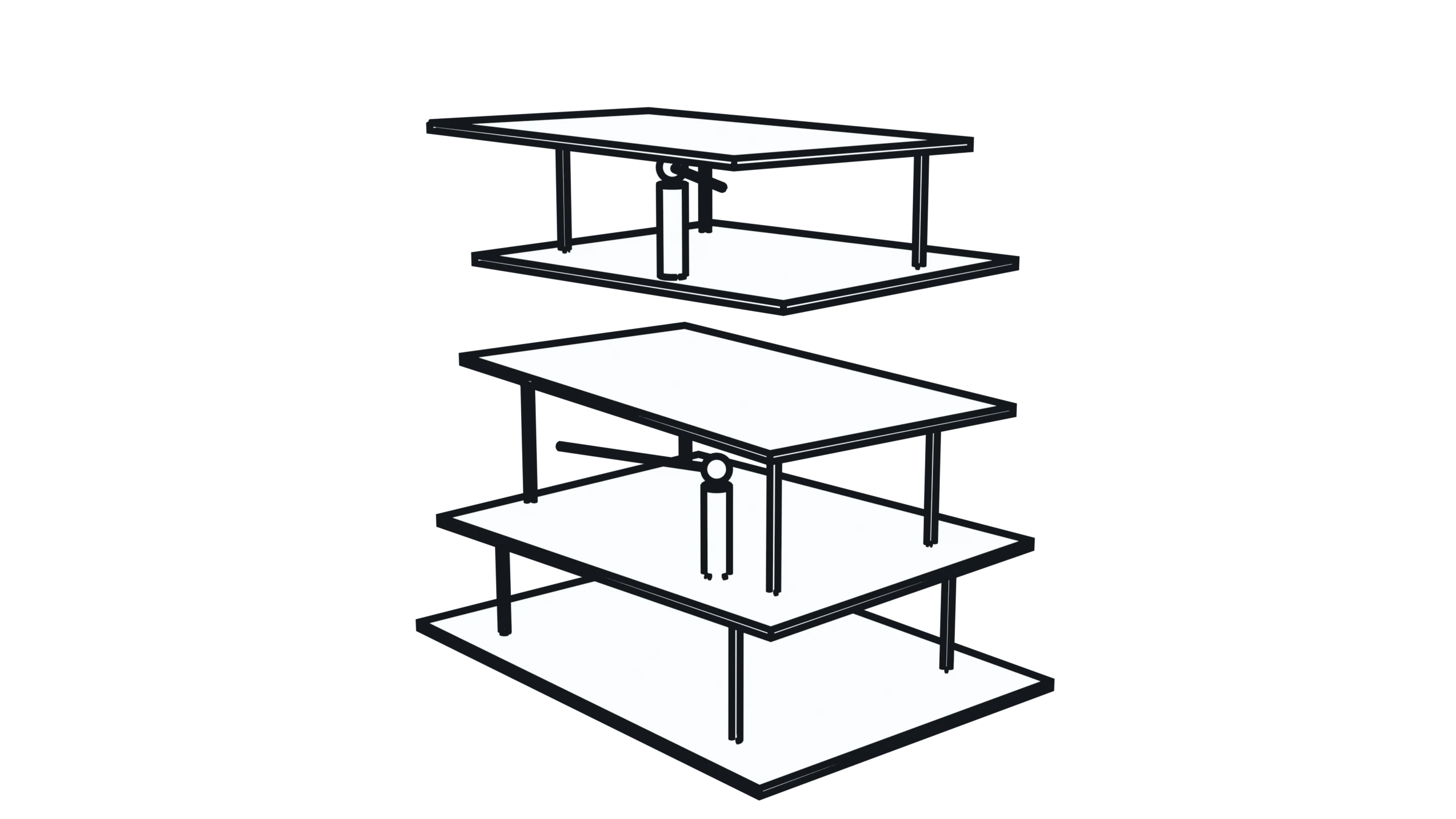
A view is a way of looking at a situation that asks a particular question. Law asks: Is this allowed? Money asks: Does this make economic sense? Relationship asks: What does this mean for us? Time asks: Can we get it done? There are professional views and human ones, and there are a lot of them. Really, a thousand lenses you can look at the same thing through.
Two things matter to me here:
- No view is more important than another from the outset. How much it weighs is decided by the situation – and some, such as the law, set limits that aren't up for negotiation.
- Every view can be broken down further – the way time breaks down into time span and days in between. Often a misunderstanding clears up as soon as you look one step closer.
If you've spent some time with communication, you'll recognize a few things here. Paul Watzlawick distinguishes between the content and relationship level, Friedemann Schulz von Thun talks about the four sides of a message, and the Harvard approach (principled negotiation), a well-known negotiation method, looks at the interests behind the positions. That's what I build on. What I'd mainly like to add is one thing: breaking things down further.
Where it tips over
Back to the meeting. That the two have different views isn't a problem. On the contrary, it's actually valuable. What makes it difficult is an assumption nobody says out loud: My view is the whole of reality.
If you think that way – and we all do sometimes without noticing, me often enough – you quickly hear an argument from the other view as dodging the point. So it gets brushed aside instead of answered. In that moment, the conflict changes views. What reaches her is: You're not taking me seriously. And she isn't wrong to feel that – her question really wasn't heard.
A factual question has turned into a relationship question. Nobody was being unfair. It's just that nobody said which question they themselves were looking at the matter with.
Often both are right – just from different views.
A perfectly ordinary sentence
Sometimes a single honest sentence is enough to turn it around:
"Okay – legally, that's a problem. I was only looking at the money just now."
Or from her side:
"I know this is going to cost us money. I'm just asking whether we're allowed to."
Neither of them has conceded the point. Both have only shown that they heard the other's question. After that, you can talk calmly about which question carries more weight in this situation.
That's really all the model is meant to do. It's meant to be a language for moments like these. It describes what goes on between people, not the people themselves. They are more than their views.
The next part is about a very short sentence that pretty much everyone knows: "It's green." A well-known model says that every message has four sides. I take a look at how well that fits with the views, and where you can look one step closer.
And you? Do you remember a conversation where you were both right – and still talked past each other? Feel free to write to me.